
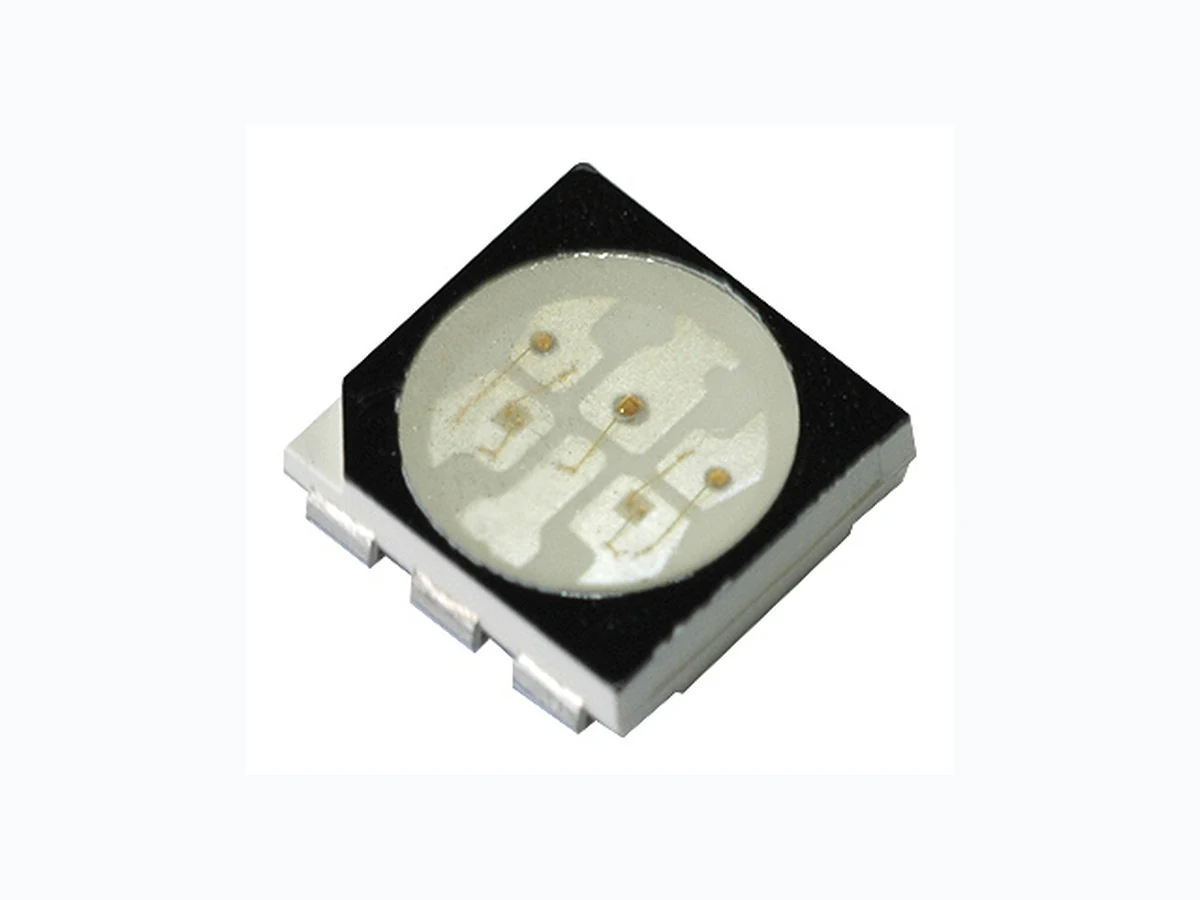
DBRTB-DJB overview
DBRTB-DJB is a component documented by DOMINANT Semiconductors. The PDF description identifies it as "High brightness tri-color surface mount LED." This guide condenses the most useful engineering information from the available PDF so that designers and sourcing teams can identify the checks that still need confirmation in the original document.
Datasheet snapshot
- Manufacturer: DOMINANT Semiconductors
- Part number: DBRTB-DJB
- Category: IC
- Datasheet length: 13 Pages
Specifications and operating details
The following points were extracted from the PDF text. Check the associated conditions, notes and limits in the complete document before using a value in a design.
- Electrical Characteristics at Tj=250C Vf @ If = 20 mA / Chip 2.1 3.2 3.2 Forward Voltage, Vf is measured with an accuracy of ± 0.1 V.
- x Compact package outline (LxW) of 5.3 x 5.2 x 1.4 mm.
- Electrical Characteristics at Tj = 25 oC Vf at If=20mA; (V) Min Typ.
- Max Red 2.0 2.1 2.6 True Green 3.0 3.2 3.6 Blue 3.0 3.2 3.6 Forward voltages are tested using a current pulse of 1 ms and has an accuracy of r 0.1V.
Topics covered by the datasheet
The document includes sections related to:
- Revision History
Engineering review checklist
- Verify forward current and voltage, optical bin, wavelength or color coordinates and viewing geometry.
- Derate light output and lifetime for junction temperature and the actual PCB thermal path.
- Confirm polarity, footprint, reflow profile and moisture-sensitivity handling before production.
Always confirm values against the latest manufacturer-controlled datasheet, especially when qualifying a substitute or releasing a production BOM.
View the complete PDF and model record
Open the DBRTB-DJB datasheet and model details to review the complete PDF, document pages and available product information.
Source attribution
Adapted from the PDF associated with this DigiCamel model page.
Source model URL: https://www.digicamel.com/product.php?slug=dbrtb-djb-dominant-semiconductors