
STQ-1016Z ETC1
Document overview
- Manufacturer or author: Provided By www.digicamel.com(FREE DATASHEET DOWNLOAD SITE)
- PDF pages: 9
Technical content
Reliability Qualification Report STQ-2016Z - Matte Sn, RoHS compliant 303 S. Technology Ct, Broomfield CO, 80021 Phone: (800) SMI-MMIC http://www.sirenza.com Document RQR-104756 Rev. B Products Qualified by Similarity The information provided herein is believed to be reliable at press time. Sirenza Microdevices assumes no responsibility for inaccuracies or omissions. Sirenza Microdevices assumes no responsibility for the use of this information, and all such inform ation shall be entirely at the user’s own risk. Data subject to change. STQ-1016Z SRF-1016Z SRQ-2116Z STQ-3016Z SRF-2016Z
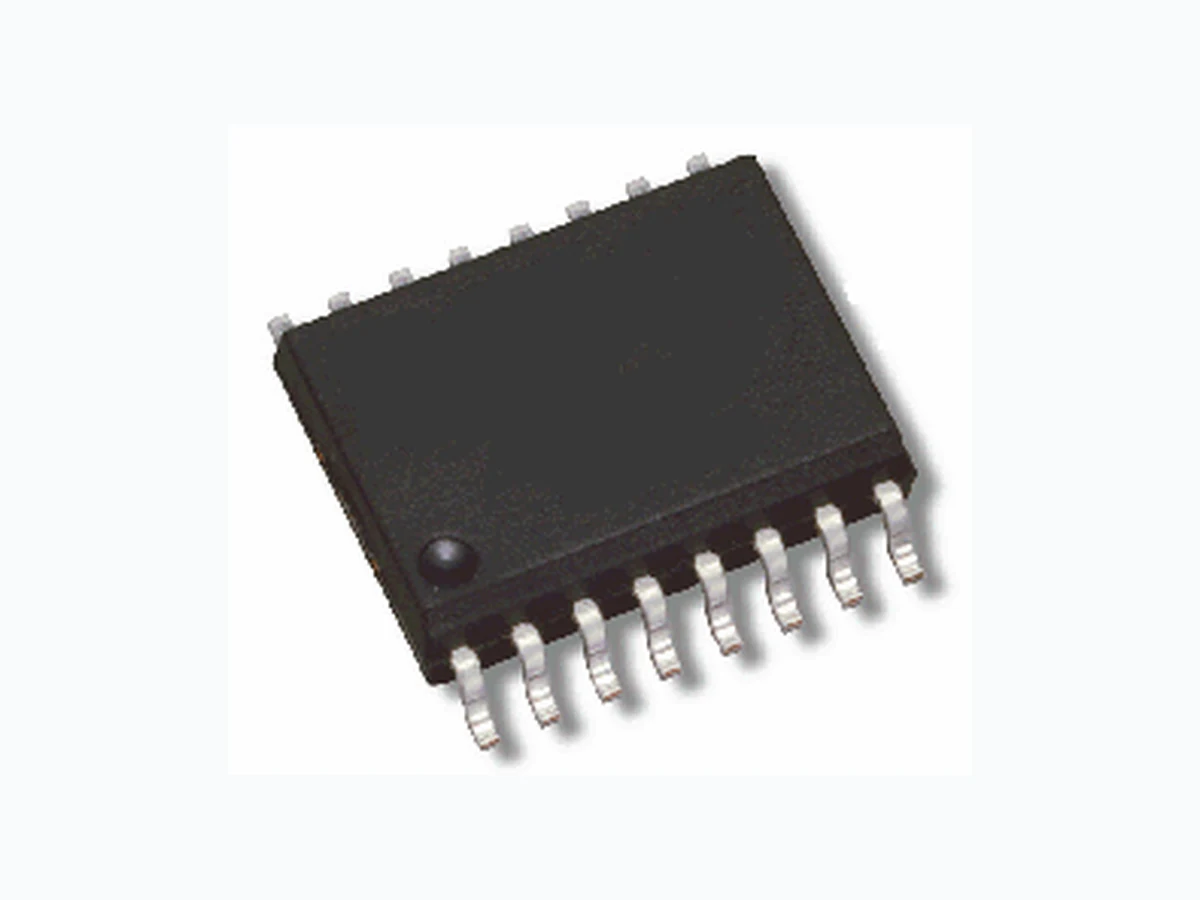
STQ-2016Z Reliability Qualification Report The STQ-2016Z family of products has demonstrated reliable operation by passing all qualification testing in Sirenza Microdevices' product qualification test plan. The STQ-2016Z has been subject to stresses such as humidity (autoclave), extreme hot and cold environments (temperature cycling), moisture sensitivity (MSL-1 and solder reflow testing), and several others as part of the qualification process. I. Qualification Overview The Sirenza Microdevices’ STQ-2016Z is a direct quadrature modulator targeted for use in a wide range of communications systems, including cellular/PCS, CDMA2000, UMTS, and ISM data com. This device features a wide 700-2500 MHz operating frequency band, excellent carrier and sideband suppression, and a low broadband noise floor. II. Introduction These amplifiers are manufactured using a Silicon Germanium Heterojunction Bipolar Transistor (HBT) technology. This patented self-aligned emitter, double poly HBT process has been in production by our foundry since 1998. The process has been successfully used for a wide range of RFIC products including GSM PAs, DECT front end transceivers, LNAs & VCOs. This process offers comparable performance to GaAs HBTs with the added advantages of mature and highly reproducible Silicon wafer processing. III. Fabrication Technology The STQ-2016Z is packaged in a plastic encapsulated TSSOP-16 package that is assembled using a highly reproducible automated assembly process. The die is mounted using an industry standard thermally and electrically conductive silver epoxy. The die is mounted directly to the exposed paddle to provide a low thermal resistance path for heat conduction out of the package. IV. Package Type Figure 1 : Image of TSSOP -16 Exposed Paddle Plastic Package
The Sirenza Microdevices qualification process consists of a series of tests designed to stress various potential failure mechanisms. This testing is performed to ensure that Sirenza Microdevices products are robust against potential failure modes that could arise from the various die and package failure mechanisms stressed. The qualification testing is based on JESD test methods common to the semiconductor industry. The manufacturing test specifications are used as the PASS/FAIL criteria for initial and final DC/RF tests. V. Qualification Methodology A device can be qualified by similarity to previously qualified products provided that no new potential failure modes/mechanisms are possible in the new design. The following products have been qualified by similarity to STQ-2016Z: STQ-1016Z STQ-3016Z SRF-1016Z SRF-2016Z SRQ-2116Z VI. Qualification By Similarity Sirenza Microdevices defines operational life testing as a DC biased elevated temperature test performed at the maximum operational junction temperature limit. For the STQ-2016Z the maximum operational temperature limit is 150oC. The purpose of the operational life test is to statistically show that the product operated at its maximum operational ratings will be reliable by operating several hundred devices for a total time of 1000 hours. The results for this test are expressed in device hours that are calculated by multiplying the total number of devices passing the test by the number of hours tested. VII. Operational Life Testing STQ-2016Z Reliability Qualification Report
0 0 V <250 V 1A 250 V 500 V 1B 500 V 1000 V 1C 1000 V 2000 V 2 2000 V 4000 V Sirenza Microdevices classifies Human Body Model (HBM) electrostatic discharge (ESD) according to the JESD22-A114 convention. All pin pair combinations were tested. Each pin pair is stressed at one static voltage level using 1 positive and 1 negative pulse polarity to determine the weakest pin pair combination. The weakest pin pair is tested with 3 devices below and above the failure voltage to classify the part. The Pass/Fail status of a part is determined by the manufacturing test specification. The ESD class quoted indicates that the device passed exposure to a certain voltage, but does not pass the next higher level. The following table indicates the JESD ESD sensitivity classification levels. IX. Electrostatic Discharge Classification X. Operational Life Test Results Part Number HBM ESD Rating STQ-2016Z Class 1A SRQ-2116Z Class 1A 39,000 40,000 150°C 150°C 1000 hours 1000 hours July 2005 Dec 2005 Quantity Device- Hours Junction Temperature Test DurationHTOL Completion Date STQ-2016Z has successfully completed 168 hours of moisture soak (85oC/85%RH) followed by three convection reflow cycles with a peak temperature of 270oC. The successful completion of this test classifies the part as JESD22-A113B Moisture Sensitivity Level 1 (MSL-1). MSL-1 indicates that no special dry pack requirements or time limits from opening of static bag to reflow exist for the STQ-2016Z. MSL-1 is highest level of moisture resistance that a device can be classified according to the above mentioned standard. VIII. Moisture Sensitivity Level - MSL Level 1 Device STQ-2016Z Reliability Qualification Report
Pass6Air to Air, Soldered on PCB -65oC to 150oC 10 min dwell, 1 min transition 1000 cycles JESD22-A104B Temperature CyclingB1a Pass10-40°C to +85°C Cycled bias (5’ on/5’off) 1000 cycles JESD22-A109A Power Temperature CycleB1d Pass15Tamb=110°C, 85%RH Biased, 264 hours JESD22-A110B HASTB1c Pass30Tamb=121°C, 100%RH Un-Biased, 96 hours JESD22-A102C AutoclaveB2 Pass60-65°C to +150°C 10 min dwell, 1 min transition 1000 cycles JESD22-A104B Temperature CycleB3 B1b B Group Pass79Tj = 150°C 1000 hours JESD22-A108B High Temperature Operating Life Pass359MSL1 Reflow @ 270oC Peak JESD22-A113C Preconditioning ResultsSample SizeTest Condition/ StandardTest Name XI. Qualification Test Results STQ-2016Z Reliability Qualification Report
Pass27Tamb=150°C 1000 hours JESD22-A103B High Temperature StorageD Pass Pass Tamb=-40°C 1000 hours Tamb=-65°C 1000 hours Low Temperature StorageC Pass30 Dip & Look Steam Age Condition C Dip Condition A, 215°C JESD22-B102C Dip & Look Steam Age Condition C Dip Condition B, 245°C JESD22-B102C SolderabilityG Pass10Tamb=60°C, 90%RH 1800 hours NEMI Tin WhiskerF Group ResultsSample SizeTest Condition/ StandardTest Name XI. Qualification Test Results STQ-2016Z Reliability Qualification Report
Figure 2: Infrared Thermal Image of STQ-2016Z, Vd = 5.0V, Id =80mA, Tj = 98°C One key issue in performing qualification testing is to accurately determine the junction temperature of the device. Sirenza Microdevices uses a 3um spot size emissivity corrected infrared camera measurement to resolve the surface temperature of the device at the maximum operational power dissipation. The results are displayed below for the STQ-2016Z device running at operational current of Id= 80mA, a device voltage of 5V, and lead temperature of 85°C. XII. Junction Temperature Determination STQ-2016Z Reliability Qualification Report
Figure 3: Infrared Thermal Image of SRQ-2116Z, Vd = 5.0V, Id =157mA, Tj = 103.8°C
STQ-2016Z Reliability Qualification Report 0.73FIT (per 109 dev-hours) @ Tj=55oC, 60% CL 0.7Activation Energy (eV) The following data demonstrates the results from accelerated life tests performed on the Sirenza 4A SiGe HBT Process. The test was performed on 791 units running at a peak junction temperature up to 195oC. The FIT rate calculation can be found below. The FIT rates were generated assuming 1 failure. In reality, there were no failures, making this a very conservative calculation. XIII. FIT Calculation from Accelerated Life Test Data Table 3: Activation Energy and calculated FIT for STQ-2016Z.