
487 LITTELFUSE
Document overview
- Manufacturer or author: Provided By www.digicamel.com(FREE DATASHEET DOWNLOAD SITE)
- PDF pages: 3
Technical content
Features
Applications
Agency Agency File Number Ampere Range E10480 8 - 20A J 50293210 8 - 20A Electrical Characteristics for Series % of Ampere Rating Opening Time 100% 60 minutes, Minimum 210% 30 minutes, Maximum 1000% 0.03 sec., Max.
- Telecom power supplies
- Data center server power supplies
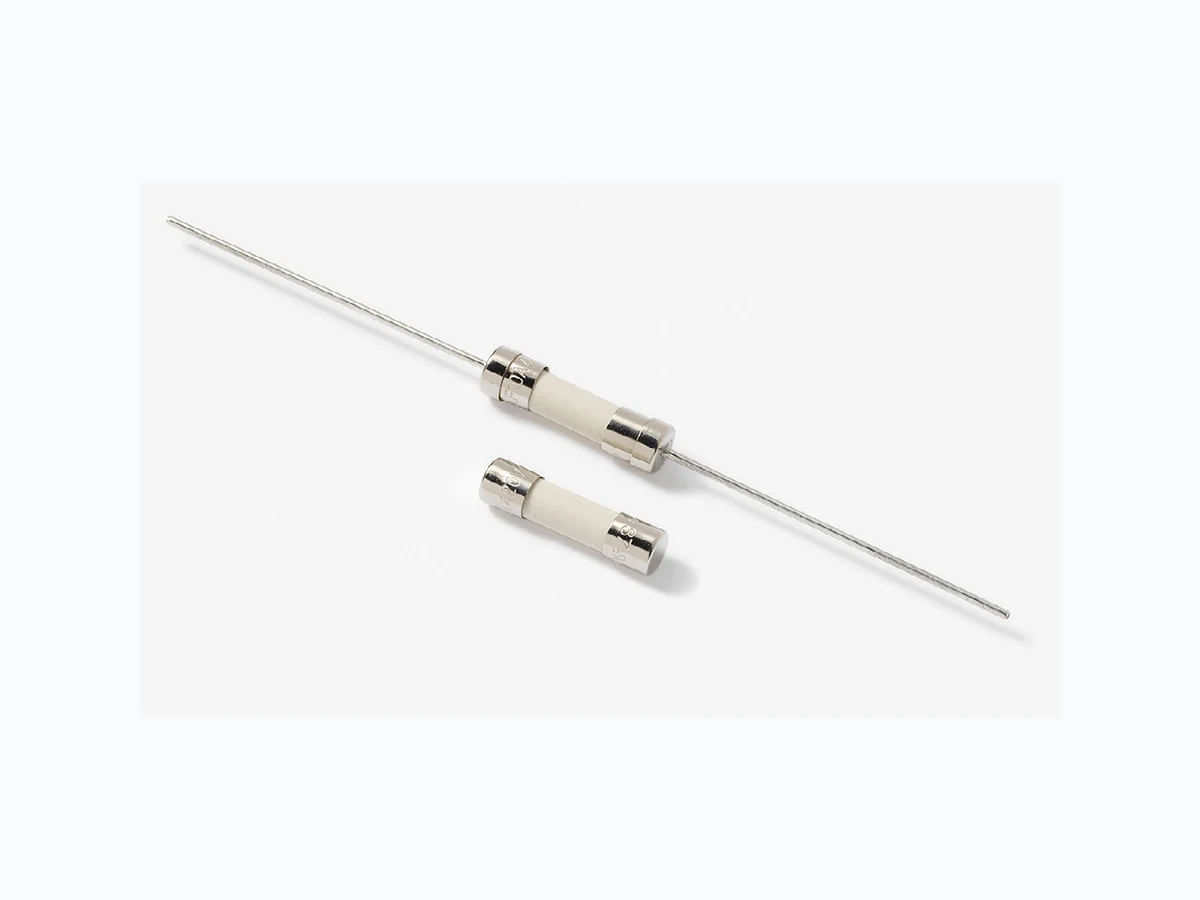
- Higher energy and power efficient applications The 487 Series is a 420VAC/420VDC rated 5x20mm fast- acting ceramic body fuse, designed to ensure the best coordination between a power supply unit (PSU) and an electrical circuit breaker panel during short-circuit and over- current faults. When installed in a PSU, the 487 series fuse opens faster than the circuit breaker and removes the problematic PSU while preventing the circuit breaker from shutting down other critical systems. With 420VAC characteristics, the 487 Series is well suited for high- energy applications like 3-phase power supplies, inverters, and ballasts. With 420VDC characteristics, it is optimal for high-voltage DC power grid in data centers, telecom applications, and intelligent commercial buildings.
- Lower I 2t and faster tripping
- High current ratings up to 20A in a 5x20mm footprint
- Rated voltage @ 420VAC, 420VDC
- Available in cartridge and axial leaded versions
- RoHS compliant and Lead-free
Description
Application testing is strongly recommended. Additional Information Datasheet SamplesResources
© 2017 Littelfuse, Inc. Specifications are subject to change without notice. Revised: 04/12/17 Axial Lead & Cartridge Fuses 5×20 mm > Fast-Acting > 487 Series Average Time Current CurvesT emperature Rerating Curve 0.001 0.01 0.1 10000 1 10 100 1000 TIME IN SECONDS CURRENT (Amps) 100 1000 15A 16A 20A 12.5A 10A8A Amp Code Amp Rating Max Voltage Rating (V) Interrupting Rating Nominal Cold Resistance (Ohms) Nominal Melting I2t (A2 sec.) Agency Approvals 008. 8 420VDC 420VAC 300A@420VDC 200A@420VAC 0.0134 65 x x 010. 10 0.0093 130 x x 12.5 12.5 0.0078 170 x x 015. 15 0.0075 190 x x 016. 16 0.0064 260 x x 020. 20 0.0043 390 x* x Electrical Characteristic Specifications by Item * Additional 750A@250VAC interrupting rating for 20A. Note: Rerating depicted in this curve is in addition to the standard derating of 25% for continuous operation.
© 2017 Littelfuse, Inc. Specifications are subject to change without notice. Revised: 04/12/17 Axial Lead & Cartridge Fuses 5×20 mm > Fast-Acting > 487 Series Packaging Packaging Option Packaging Specification Quantity Quantity & Packaging Code Reel Size
487 Series
Dimensions Part Numbering System 20±0.5 5.2+0.1/-0.2 5.1±0.6 21.5±1.0 Note: *Rating of 20A has 1.20±0.05 diameter lead 5.5±0.3 ø1.00±0.05* 40.00±1.0 All dimensions in mm 0487 xxxx M X E P Series Option Code Blank: Cartridge Type Fuse E = Axial Leaded Fuse Packaging Code X = Filler Quantity Code M = 1000 Amp Code Refer to Amp Code column of Electrical Characteristics Table P: Lead-Free Soldering Parameters - Wave Soldering Dwell Time 100 120 140 160 180 200 220 240 260 280 300 100 110 120 130 140 150 160 170 180 190 200 210 220 230 240 Time (Seconds) Temperature (°C) - Measured on bottom side of board Cooling TimePreheat Time Wave Parameter Lead-Free Recommendation Preheat: (Depends on Flux Activation Temperature) (Typical Industry Recommendation) Temperature Minimum: 100° C Temperature Maximum: 150° C Preheat Time: 60-180 seconds Solder Pot Temperature: 260° C Maximum Solder Dwell Time: 2-5 seconds Recommended Hand-Solder Parameters: Solder Iron Temperature: 350° C +/- 5°C Heating Time: 5 seconds max. Note: These devices are not recommended for IR or Convection Reflow process. Recommended Process Parameters: Materials Body: Ceramic Cap: Nickel–plated Brass Leads: Tin–plated Copper T erminal Strength MIL -STD-202, Method 211, Test Condition A Solderability MIL -STD-202 Method 208 Product Marking Cap 1: Brand logo, current and voltage ratings Cap 2: Series and agency approval markings Product Characteristics Operating Temperature –55ºC to +125ºC Thermal Shock MIL -STD-202, Method 107 , Test Condition B Vibration MIL -STD-202, Method 201 Moisture Resistance MIL -STD-202, Method 103, Test Condition A Salt Spray MIL -STD-202, Method 101, Test Condition B