
DATASHEET SEARCH SITE
Document overview
- Manufacturer or author: Provided By digicamel.com
- PDF pages: 3
Technical content
Features
Electrical Characteristics for Series
Applications
Electrical Characteristic Specifications by Item Agency Approvals Agency Agency File Number Ampere Range PS E NBK131107-JP1021A NBK010207- JP1021A/B/C/D 1A - 30A SU05001-8001 SU05001-7001/2/3/4 3A - 6A 7A/10A - 30A 1A - 30A Amp Code Amp Rating Voltage Rating Breaking Capacity Nominal Resistance Cold Ohms (ohms) Nominal Melting 2T (A2Sec.) Agency Approvals PS E 001 . 1 250 100A @ 250Vac 0.1651 0.800 x x 01 .5 1 .5 250 0.0845 2.680 x x 002. 2 250 0.0522 7 .200 x x 02.5 2.5 250 0.0375 9.540 x x 003. 3 250 0.0313 22.10 x x x 004. 4 250 0.0239 28.50 x x x 005. 5 250 0.0184 66.10 x x x 006. 6 250 0.0140 116.0 x x x 007 . 7 250 0.0127 118.0 x x x 008. 8 250 0.0109 166.0 x x 009. 9 250 0.0082 298.0 x x 010. 10 250 0.0072 234.6 x x x 012. 12 250 0.0052 490.5 x x x 015. 15 250 0.0042 1029 x x x 020. 20 250 0.0029 2041 x x x 025. 25 250 0.0019 3717 x x x 030. 30 250 0.0013 7531 x x x
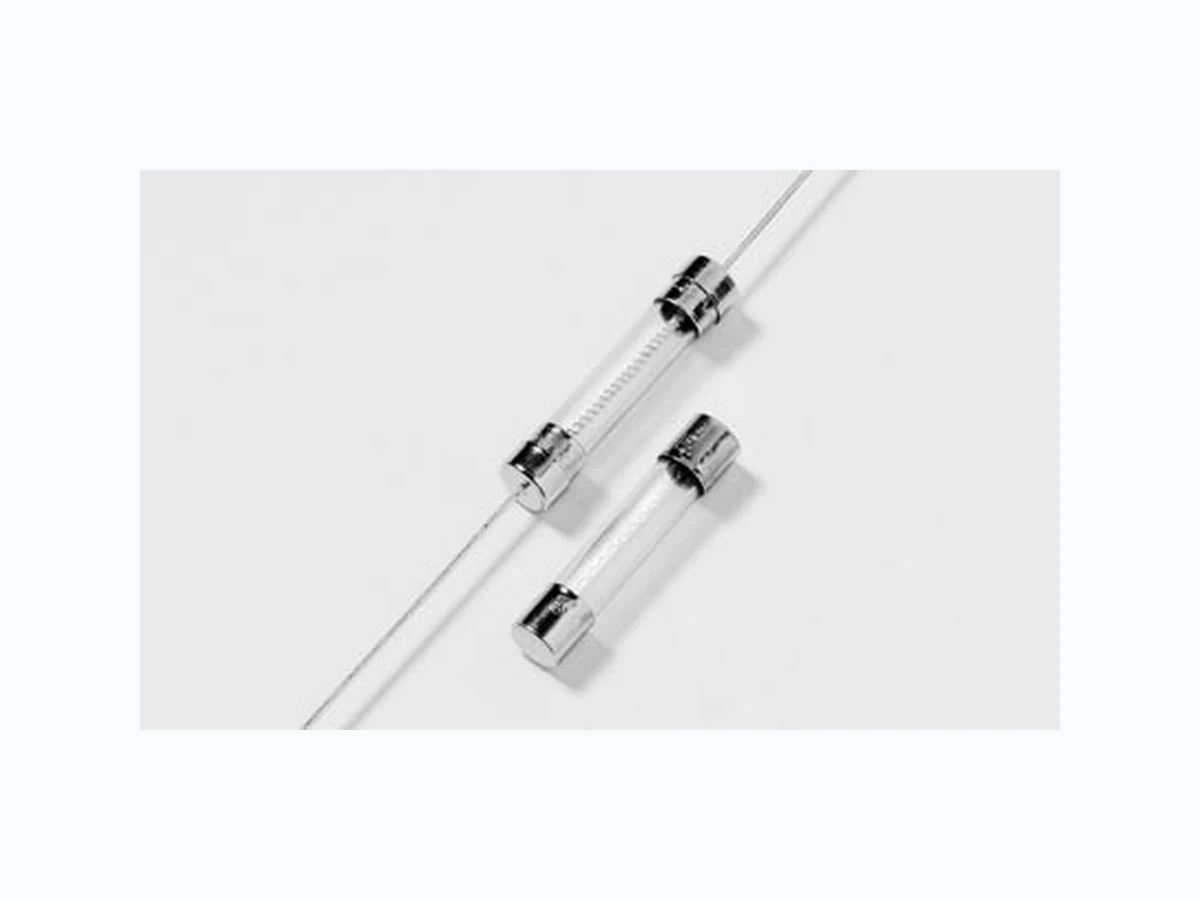
388 Series Lead-Free 3AG, METI B Fuse
t %FTJHOFEUP+BQBOFTF Standard JIS C6575 t 3P)4DPNQMJBOUBOE Lead-free t "WBJMBCMFJODBSUSJEHF and axial lead form and various forming demensions % of Ampere Rating Opening Time 130 1 Hour, Minimum 160 1 hour, Maximum 200 120 seonds, Maximum 1 Depending on the application and mounting, the fuse heating at max. ambient temperature in a closed fuseholder should be considered. p = pending Note: 1 .00 means the number one with two decimal places. 1,000 means the number one thousand. The Littelfuse 388 Series is a 3AG size fuse that solves a broad range of application requirements while offering reliable performance and cost-effective circuit protection. Used as supplementary protection in appliance or utilization equipment to provide individual protection for components or internal circuits. PS E
Description
Revised: January 7, 2009 Introduction to Circuit ProtectionIntroduction to Circuit Protection Transientology 334 © 2009 Littelfuse, Inc. Specifications are subject to change without notice. Axial Lead & Cartridge Fuses "(.&5*#'VTF4FSJFT
388 Series
Please refer to www.littelfuse.com/series/388.html for current information. Average Time Current CurvesT emperature Rerating Curve 1000 100 0.1 0.01 10 100 10000.1 1 TIME IN SECONDS CURRENT IN AMPERES 1.5A 2.5A 10A 12A 15A 20A 25A 30A Soldering Parameters - Wave Soldering Dwell Time 100 120 140 160 180 200 220 240 260 280 300 100 110 120 130 140 150 160 170 180 190 200 210 220 230 240 Time (Seconds) Temperature (°C) - Measured on bottom side of board Cooling TimePreheat Time Wave Parameter Lead-Free Recommendation Preheat: (Depends on Flux Activation Temperature) (Typical Industry Recommendation) Temperature Minimum: 100° C Temperature Maximum: 150° C Preheat Time: 60-180 seconds Solder Pot Temperature: 260° C Maximum Solder Dwell Time: 2-5 seconds Recommended Hand-Solder Parameters: Solder Iron Temperature: 350° C +/- 5°C Heating Time: 5 seconds max. Note: These devices are not recommended for IR or Convection Reflow process. Recommended Process Parameters:
Revised: January 7, 2009 335© 2009 Littelfuse, Inc. Specifications are subject to change without notice. Axial Lead & Cartridge Fuses "(.&5*#'VTF4FSJFT Please refer to www.littelfuse.com/series/388.html for current information. 388 000P Series 388 000EP Series 6.35 (.25") 32.72 (1.288") 31.75 (1.25") 6.985 (.275") 38.1 (1.50") TYP . Axial Lead Material: Tin coated copper. 0.813 (.032") Dimensions (mm) Packaging Packaging Option Packaging Specification Quantity Quantity & Packaging Code Reel Size
0388 M X E Pxxxx
X = Filler Option Code E = Axial leaded fuses Blank = Cartridge fuses Quantity Code M = 1000 Amp Code Refer to Amp Code column of Electrical Characteristics Table Product Characteristics Operating Temperature -55ºC to +125ºC (consider de-rating) Thermal Shock MIL -STD-202G Method 107 G, Test conditon B:(5 cycles - 65ºC to 125ºC) Vibration MIL -STD-202G, Method 201A Humidity MIL -STD-202G, Method 103B, Test Condition A: High RH (95%) and Elevated temperature (40°C) for 240 hours Salt Spray MIL -STD-202G, Method 101D, Test Condition B Materials Body: Glass End Caps: Nickel–plated brass Leads: Tin–plated Copper T erminal Strength MIL -STD-202G, Method 211A, Test Condition A Solderability Reference IEC 60127 Second Edition 2003-2001 Annex A Product Marking Cap1: Brand logo, current and voltage ratings Cap2: Series and agency approval marks